The Salon Innovations That Are Actually Worth the Hype
A Hair salon is where exciting beauty ideas should become wearable, personalized plans rather than experiments that only look good for one photograph.
Hair innovation moves fast. New treatment language, color techniques, styling tools, extension methods, and digital inspiration appear constantly. Some developments genuinely improve customization or convenience. Others are familiar concepts dressed in futuristic packaging.
The smartest approach is not to chase every launch. It is to identify the innovations that solve a real problem, whether that means creating softer color transitions, reducing styling time, adding flexible volume, or making maintenance easier to understand.
The Consultation Is the Original Beauty Technology
A phone filled with inspiration photographs is helpful, but pictures alone cannot account for natural texture, density, previous chemicals, growth patterns, or daily habits. The best innovation begins with better information.
Instead of presenting one heavily edited image and requesting an exact copy, build a small reference collection containing:
- An overall favorite: The image that captures the mood of the desired result
- A realistic comparison: A similar look on hair closer to your natural texture or starting color
- A detail reference: An example of the fringe, layering, tone, or placement you like
- A boundary image: A result showing what feels too warm, blunt, dramatic, or high-maintenance
Explain why each photograph matters. A stylist may discover that you love the brightness in one image but prefer the softer shape of another. That information is far more useful than a trend name alone.
Modern Color Is About Mapping, Not Just Choosing a Shade
One of the most useful developments in professional color is the shift from treating the entire head as one uniform canvas. Strategic placement can create brightness, depth, movement, or a softer grow-out without applying the same formula everywhere.
This makes color planning more like design. The stylist can consider the hairline, parting, natural base, interior depth, ends, and face-framing sections separately. Highlights, balayage, glosses, lowlights, and dimensional color can then be combined according to the intended effect.
The science underneath the creativity matters. A review available through the National Library of Medicine describes the hair shaft’s cuticle and cortex, including the role of the cortex in strength, elasticity, texture, and natural color. Chemical processes that change pigment or structure interact with this physical material, so the starting condition influences what can be achieved responsibly.
The American Academy of Dermatology notes that significant lightening can be more damaging than remaining closer to the natural shade. That is one reason a major transformation may be divided into stages.
Small tests can prevent big surprises
A strand test is decidedly low-tech, yet it remains one of the smartest tools available. Processing a limited section can reveal how old color lifts, how quickly the hair responds, and whether the expected tone is realistic.
Clients should also disclose earlier reactions to color products. The U.S. Food and Drug Administration explains that hair dyes can cause sensitivity and allergic reactions, including in people who previously used color without difficulty.
A useful color consultation should cover chemical history, desired tone, maintenance frequency, hair condition, expected fading, and the possibility of preliminary testing.
Hair Treatments Are Becoming More Targeted
The treatment aisle once seemed to offer the same promise in dozens of different jars. Current professional routines can be more specific, with products selected according to dryness, porosity, chemical exposure, buildup, tangling, or styling habits.
Specificity is valuable, but dramatic marketing language still deserves scrutiny. Words such as repair, renewal, strengthening, detox, or transformation may describe an improvement in appearance or manageability without meaning that a product medically heals living tissue.
The FDA’s explanation of cosmetic labeling claims notes that cosmetic claims must be truthful and not misleading. Products promoted as treating disease or affecting the body’s structure or function may fall under drug requirements.
Ask what a treatment is designed to change
- Will it primarily add softness or slip?
- Is it intended to reduce visible buildup?
- Does it support easier detangling or styling?
- Is it being recommended before or after a chemical service?
- How long should the cosmetic effect last?
- Could it make fine or low-porosity hair feel heavy?
A precise explanation is more valuable than a list of fashionable ingredients. It also makes it easier to decide whether the treatment addresses your actual concern.
Extensions Have Become a More Modular Design Tool
Extensions are no longer discussed only as a route to extremely long hair. They can be used to add fullness through the sides, support a particular haircut, introduce carefully placed color, or compensate for areas that feel less dense.
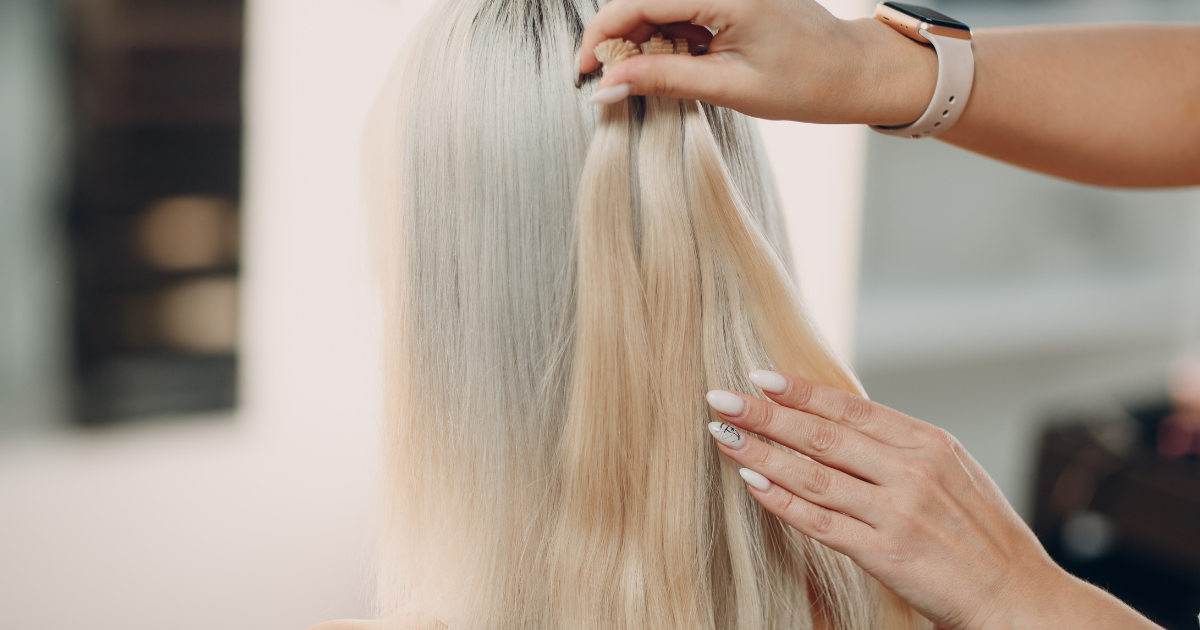
Tape-in extensions offer one modular approach, but the result still depends on sectioning, weight distribution, matching, installation, maintenance, and home care. Added hair should integrate with the natural shape rather than simply hang beneath it.
Comfort is an important performance measure. The American Academy of Dermatology advises that extensions should not cause pain or headaches and recommends giving natural hair periodic breaks from tension.
Before choosing extensions, discuss:
- The goal of adding length, fullness, color, or a combination
- How the natural hair will be blended
- Which brushes, products, and washing techniques are appropriate
- How often the installation requires professional adjustment
- What happens if the scalp feels sore or an attachment slips
- How removal will be performed
The innovation is not merely the attachment method. It is the ability to plan added hair as part of a complete cut, color, and maintenance strategy.
Smarter Heat Styling Focuses on Efficiency
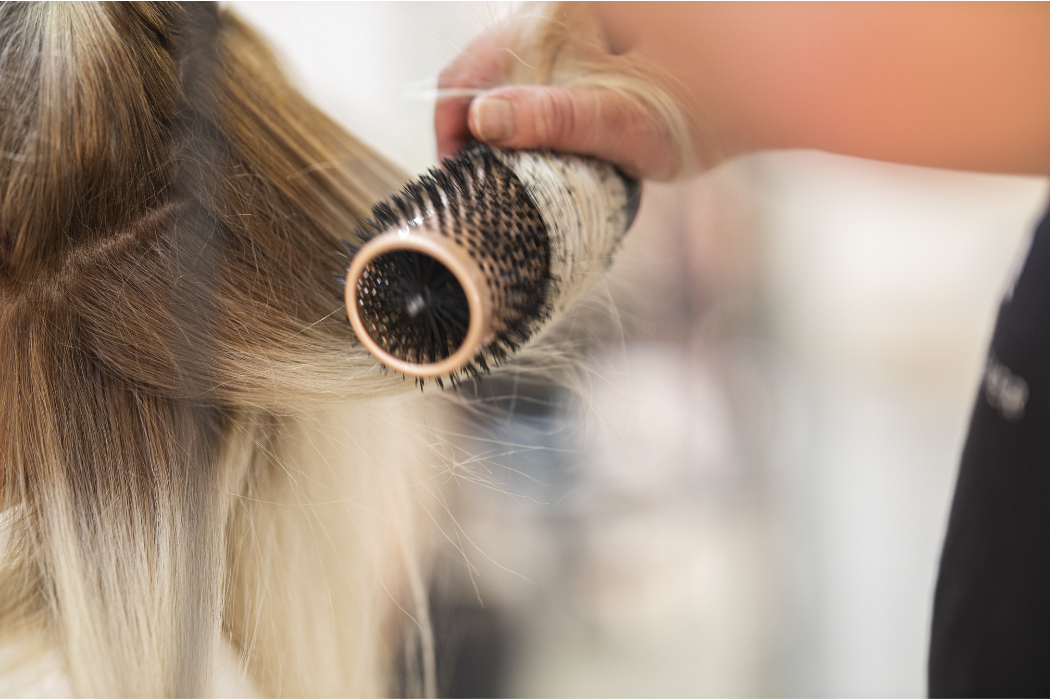
Modern tools offer sensors, multiple heat settings, specialized plates, concentrated airflow, and attachments for different textures. Those features can be helpful, but hotter is not automatically better.
Efficient styling means achieving the desired result with the least unnecessary repetition. The American Academy of Dermatology recommends limiting excessive heat and handling wet hair carefully because it can break more easily.
A practical heat-smart routine includes:
- Removing excess water gently before blow-drying.
- Applying a product labeled for heat protection when appropriate.
- Using the lowest temperature that effectively styles the hair.
- Working in manageable sections to avoid heating the same area repeatedly.
- Choosing a haircut that supports the intended finish.
- Learning the exact tool angle and movement used by the stylist.
If a salon result cannot be recreated without an exhausting routine, the solution may be a modified shape or styling plan rather than another device.
Smoothing Services Need Transparency More Than Buzzwords
Smoothing is a category in which similar-sounding services may produce very different outcomes. One formula may mainly reduce frizz, while another creates a noticeably straighter result. Processing steps, heat requirements, ingredients, longevity, and aftercare can vary.
The Occupational Safety and Health Administration reports that some hair-smoothing products may contain or release formaldehyde, including products that have been marketed with misleading labels.
Before selecting a smoothing service, ask for the exact product name, intended result, expected change to the natural texture, heat process, ventilation measures, and maintenance instructions. “Keratin” should not be treated as a complete technical explanation.
Experience Design Is a Genuine Salon Innovation
Not every meaningful improvement comes from chemistry or equipment. Salon visits are also becoming more adaptable to how clients use their time.
A Perfect Hue Salon in Las Vegas offers haircuts and styling, professional color, highlights, balayage, tape-in extensions, hair treatments, and blowout membership options. Its public service information also recognizes that some guests may prefer a quieter experience where they can read, work, relax, or recharge.
That type of personalization matters. A social visit may be perfect one day, while a calm service suits another. Membership models can also make sense for people who already know they regularly use a particular service, although the value should be judged against actual habits rather than the excitement of joining.
How to Spot Innovation That Is More Than Marketing
A promising innovation should be explainable. The stylist should be able to describe what it does, whom it suits, what its limitations are, and how it changes the maintenance plan.
Use this quick evaluation:
- Problem: What specific concern does the service address?
- Mechanism: How is the result created?
- Fit: Why is it appropriate for this hair type and history?
- Tradeoff: What maintenance, cost, or potential stress comes with it?
- Evidence: Can the professional show realistic results or explain the product instructions?
- Exit plan: How will the service grow out, fade, move up, or be removed?
Innovation should still operate within professional standards. The Nevada State Board of Cosmetology provides licensing, inspection, education, and consumer-protection information for cosmetology-related services in the state.
The future of hair is not about surrendering every decision to an app, device, or impressive product name. It is about combining creative techniques with better questions, thoughtful testing, clear expectations, and individualized maintenance. The most exciting innovation is the one that continues to make sense after the trend has left your feed.