Beauty, Upgraded: Salon and Spa in Neenah, WI
A modern salon and spa in Neenah, WI can make personal care smarter by combining customized consultations, coordinated services, and realistic maintenance guidance in one…
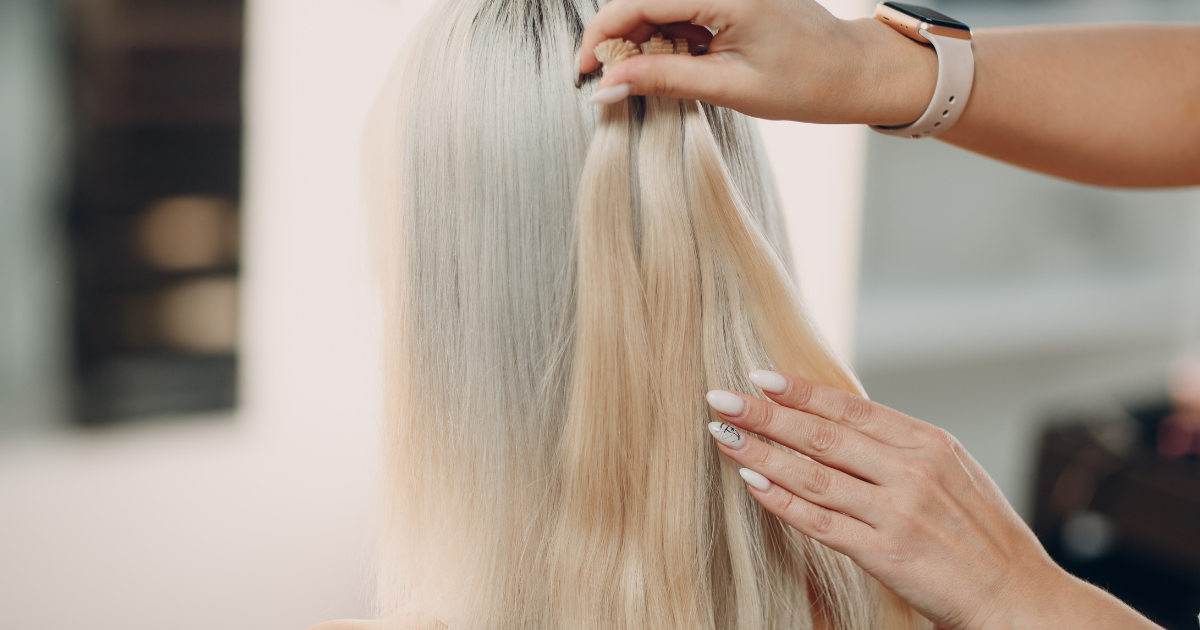
Thoughtful personalized extension services begin with a design question, not a bundle count: where can added hair create the desired length, fullness, or color while still moving naturally and feeling comfortable?
Extensions have become more adaptable because stylists can work with different attachment footprints, strand sizes, weft constructions, lengths, textures, and color blends. Yet the most convincing result is rarely the one with the most hair. It is the one in which every decision supports the natural hair and the client’s actual routine.
Think of a great installation as a small system. The foundation distributes weight. The color map creates continuity. The haircut blends two densities into one silhouette. Home care keeps the system functioning between salon visits.
“I want extensions” is only the beginning. Added hair can solve several different design challenges, and each one may require a different amount and placement.
A client seeking subtle fullness may need a smaller, more strategic addition than someone building dramatic length. Starting with the visual goal prevents the method from dictating the outcome.
The attachment footprint is the amount of natural hair and scalp space involved in supporting each extension. Larger weft rows, flat adhesive tabs, and individual keratin-tipped strands distribute and conceal added hair differently.
A weft places a curtain or track of extension hair across a horizontal section. This can create efficient coverage and substantial fullness, but row position must work with head shape, density, parting habits, and the hairstyles the client wants to wear.
Fusion or keratin-tip methods attach smaller sections individually. This gives the stylist flexibility around movement and placement, although it also creates many separate bonds that must be cared for correctly.
Tape-in extensions use paired adhesive sections that sit relatively flat against the natural hair. Their broader panels can provide quick coverage, but the placement still needs enough surrounding hair for concealment and support.
No method is automatically the best. The right choice depends on the goal, natural density, scalp condition, preferred styling, maintenance commitment, and how visible the attachment points might be during movement.
Added length creates added weight. A balanced installation spreads that load across suitable sections rather than asking fragile areas to support too much.
The American Academy of Dermatology’s extension-care guidance advises beginning with natural hair in good condition, using a professional stylist, and speaking up if the style causes pain or a headache. Discomfort is not a normal “breaking-in” requirement.
A review indexed by PubMed describes traction alopecia as hair loss caused by prolonged or repetitive pulling. Risk is influenced by hairstyle practices and the amount of tension applied over time.
That is why more hair is not always a better value. A lighter plan that preserves comfort, mobility, and scalp access may be the more sophisticated choice.
Natural hair is rarely one flat color. Roots can be deeper than ends, the interior may be cooler, and sun-exposed pieces may be brighter or warmer. Matching only the most obvious strand can leave a visible line between the natural hair and extensions.
A dimensional color map may combine:
Texture affects color perception too. Curves catch and reflect light differently from straight sections, while smooth styling can reveal contrasts that disappear in waves. Color should be evaluated in the finishes the client actually wears.
Even an excellent color match can look obvious if the natural perimeter sits as a shelf over the extensions. After installation, the stylist may need to connect the shorter and longer lengths, soften weight, and shape the outline.
The goal is not to thin every visible edge. Fine or fragile hair may need much of its natural density preserved. Blending should remove only what improves the transition.
A useful movement check includes:
If a bond or row appears during an everyday movement, the solution may involve placement, blending, styling instruction, or a more realistic expectation for that hairstyle.
Extension planning often focuses on the final look while overlooking the hours between photos. Exercise, swimming, sleep position, helmets, hats, frequent travel, and the time available for drying all matter.
Someone who trains daily may prioritize secure styling and easy scalp cleansing. A client who rarely blow-dries may need a texture match that behaves well with air-drying. Someone who wears the hair up for work needs attachments positioned for that movement.
The American Academy of Dermatology recommends choosing care according to hair type, conditioning after washing, handling wet hair gently, and limiting excessive heat. These basics remain important when extensions are present, but the stylist’s method-specific instructions should guide brushing, cleansing, drying, and product placement.
Extensions do not stay in the same relationship to the scalp. Natural hair grows, attachment points move downward, and daily wear changes the balance. Different methods therefore have different schedules for adjustments, reinstallation, removal, or replacement.
Before committing, ask for the full ownership plan:
The installation price is only one part of the decision. Maintenance visits, replacement hair, color coordination, home care, and styling time all contribute to the real commitment.
A mild awareness of added hair can differ from persistent pulling, tenderness, bumps, headaches, or broken hairs around attachment points. The AAD also warns that hairstyles that repeatedly pull can lead to traction alopecia, and early warning signs can appear before obvious hair loss.
Do not wait for a scheduled maintenance visit if the installation becomes painful or the scalp looks inflamed. Contact the salon promptly. Rapid, patchy, or otherwise unusual hair loss should be discussed with a healthcare professional; MedlinePlus notes that hair loss has many potential causes and treatment depends on identifying the cause.
Lola Hair Studio in Cambridge, Massachusetts, currently offers Bellami extensions in weft, fusion or keratin-tip, and tape-in formats. Its published menu also includes single, double, traditional beaded, and Infinity Weft options, with choices in different colors, lengths, and textures.
The salon describes wefts as providing veil-like coverage, individual fusion bonds as creating detailed blending, and tape-ins as flat attachments that can create broad coverage. Its process begins with a consultation that considers hair type, goals, lifestyle, and budget, followed by installation, blending, and styling.
This method range matters because personalization is not simply selecting a shade from a ring. It means choosing an attachment strategy, amount of hair, color combination, shape, and upkeep plan that function together.
The smartest extension innovation is not an attachment that promises to be universally invisible. It is a custom system that accounts for where the hair is strong, how the client moves, and what the finished style must do every day. When foundation, color, cut, and maintenance agree, the extensions stop looking like an accessory placed on the hair and start behaving like part of the design.