The Beauty Match: Hair Salon in Nashville, TN
A hair salon in Nashville, TN can deliver a more personal experience when the client, stylist, service, and long-term hair plan are thoughtfully matched from…

A hair salon in Nashville, TN can deliver a more personal experience when the client, stylist, service, and long-term hair plan are thoughtfully matched from the beginning.
Modern salon innovation is not always about a futuristic styling tool. Sometimes the smartest improvement is a better way to understand what someone actually wants before the appointment begins. Hair history, texture, daily routine, preferred aesthetic, maintenance expectations, and future goals can all influence which service makes sense.
That is why personalization has become one of the most meaningful shifts in professional beauty. Instead of selecting a trending photo and hoping it translates perfectly, clients can work toward a look designed for their own features, lifestyle, and hair condition.
Most disappointing salon experiences do not begin with a lack of inspiration. They begin with a mismatch. The requested service may not fit the desired result, the appointment may not allow enough time, or the reference image may show a completely different starting point.
A client may ask for balayage when dimensional highlights would better create the desired contrast. Someone requesting a short haircut may love the photographed style but not the daily styling routine behind it. Another person may want extensions for length when carefully placed volume would accomplish the real goal.
Good consultation turns an idea into a realistic plan. It helps answer several important questions:
The process does not make beauty less creative. It gives creativity a useful direction.
Digital consultation tools can help salons gather essential details before the client arrives. A new guest may be able to describe current concerns, upload inspiration, share service history, and explain the desired outcome in advance.
This early information can help identify the correct appointment category and reduce avoidable surprises. It may reveal that a major color change needs additional time, an extension service requires an initial consultation, or a corrective process should be approached across multiple visits.
Online stylist-matching tools serve a related purpose. Salon teams often include professionals with different specialties, approaches, and personalities. One stylist may focus on lived-in blonde, another on vivid color, and another on precision short cuts. Matching a client with the right professional can improve communication before any cutting or color begins.
Spark’d explores this broader movement in its discussion of the shift toward personalized salon experiences. Technology is most useful when it supports human expertise rather than trying to replace it.
Hair trends are valuable sources of inspiration, but they should be treated as starting points. The same bob, fringe, highlight pattern, or blowout will not behave identically on every person.
The 2026 hair trends highlighted by Vogue range from polished blowouts and sculptural curls to distinctive cuts and dimensional color. That variety reflects an important beauty movement: personal style is becoming more valuable than strict conformity.
A stylist can translate an inspiration image by examining:
The finished result may not be an exact duplicate of the reference photo—and that can be a good thing. A personalized version should look intentional on the person wearing it, not like a borrowed trend that only works under studio lighting.
A haircut should continue working after the salon finish is gone. That requires planning for ordinary mornings, weather, exercise, work, travel, and the amount of time someone wants to spend styling.
For a low-maintenance client, the strongest design may be a cut that supports natural movement and grows out gracefully. Someone who enjoys daily styling may prefer more structured layers, bangs, or a precision shape. Neither approach is universally better. The right choice depends on the routine.
Clients can help by describing what they actually do—not what they imagine they might start doing. If the usual routine is five minutes and minimal heat, that information is more useful than promising to master a round-brush blowout every morning.
Hair condition should also influence the plan. The American Academy of Dermatology’s healthy-hair recommendations emphasize choosing care practices based on hair type, handling wet hair gently, conditioning appropriately, and protecting hair from excessive heat. A well-designed cut should make those healthy habits easier to maintain.
Professional color is both creative and technical. Undertone, starting level, previous formulas, porosity, placement, and maintenance frequency all shape the outcome. Even a seemingly simple request for brunette, blonde, red, or gray blending can involve many possible directions.
Personalized color planning begins with the visual goal. Does the client want brightness around the face, subtle dimension, full gray coverage, a softer grow-out, or a dramatic change? Next comes the practical question: how often does the client realistically want to return?
Those answers help determine whether the plan should involve highlights, balayage, base color, glossing, corrective work, or a combination completed over time. A thoughtful strategy also considers how future appointments will maintain the result.
Hair dyes must be used according to appropriate directions and safety practices. The U.S. Food and Drug Administration’s hair-dye safety guidance includes precautions such as following warnings, performing recommended skin testing, using gloves, and avoiding the mixing of different dye products.
For anyone curious about the science behind common products, a medical review titled “Hair Cosmetics: An Overview” explains how shampoos, conditioners, dyes, straightening products, and other cosmetics interact with the hair shaft. Professional knowledge helps convert that chemistry into choices appropriate for an individual client.
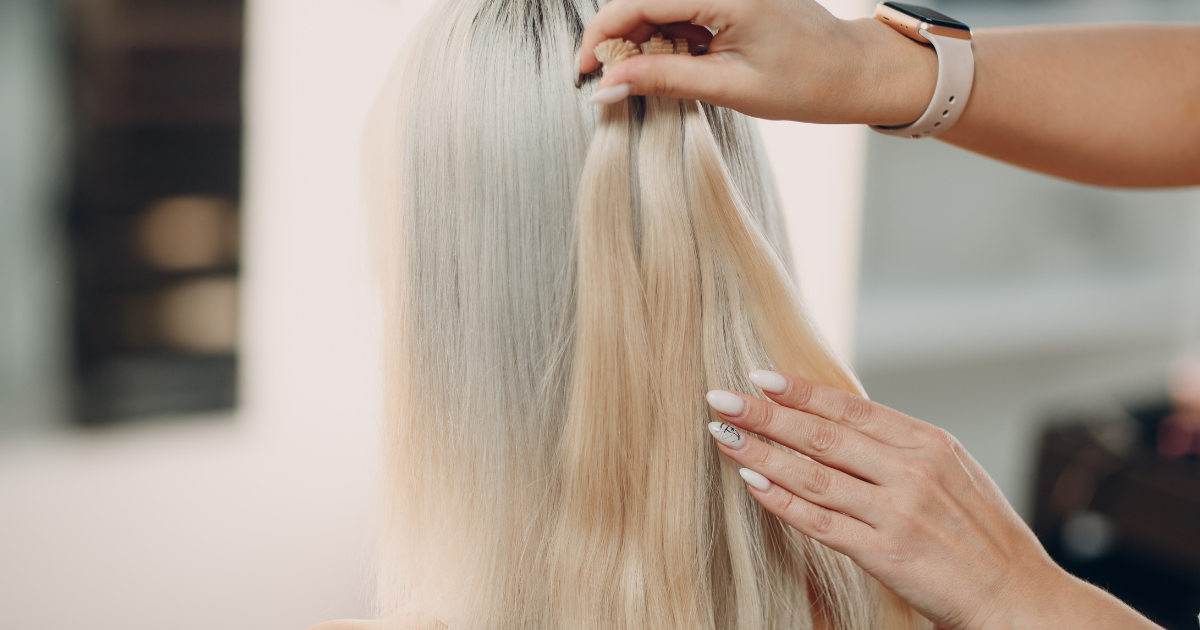
Extensions can add length, fullness, or targeted volume, but the best results depend on more than selecting a preferred length. The stylist must consider natural density, color matching, desired movement, placement, daily care, and how the extensions will blend with the existing haircut.
The client’s lifestyle is equally important. Maintenance appointments, home care, heat styling, and recommended product use should be understood before installation. An extension plan is more successful when the client knows what continued care involves.
Extensions should also be comfortable and appropriately managed. The American Academy of Dermatology’s advice for preventing hair damage warns that consistently tight or heavy hairstyles can contribute to tension and breakage. Clients experiencing discomfort, scalp irritation, or unexpected shedding should contact their stylist rather than ignoring the problem.
Terms such as “repair,” “moisture,” “strength,” and “smoothing” are often used broadly in beauty marketing. A personalized salon experience looks beyond the label and asks what the hair needs today.
Dry-feeling hair may benefit from a different approach than weak or heavily lightened hair. Fine hair can become weighed down by products that work beautifully on dense, coarse hair. Extensions may require care that differs from the client’s natural strands.
Conditioning ingredients can improve manageability, reduce friction, and influence how the hair feels and reflects light. A review of silicones in hair care discusses how different formulations can interact with hair and contribute to conditioning performance. The larger lesson is simple: ingredient categories are not automatically good or bad. Their usefulness depends on the formulation, hair type, and desired result.
A salon result lasts longer when the client understands how to care for it. However, a useful home plan should be manageable. A shelf full of products is not necessarily better than a short routine that someone will follow consistently.
Ask the stylist to prioritize the essentials:
For heat styling, technique matters as much as the tool. Dermatologists recommend limiting excessive heat, allowing hair to partially dry when practical, and using lower settings. Additional guidance on styling without damage also explains that wet-hair handling should be adjusted for different textures.
Style House Salon offers virtual consultations and a stylist-matching process designed to help new guests identify suitable services and professionals. Its Nashville service menu includes custom color and highlights, precision cuts, styling, blowouts, hair extensions, and smoothing and conditioning treatments.
Located in Green Hills, the salon approaches the hairstylist as a beauty ally—someone who learns the client’s preferences and helps turn an idea into a workable result.
The future of salon care is not about making every client follow the same trend more efficiently. It is about using better communication, informed product choices, skilled technique, and thoughtful planning to create something individual. When the right person is matched with the right stylist and service, beauty innovation feels less like technology for its own sake and more like being genuinely understood.