Why Salons Are Embracing Personalized Hair Care
A Hair salon can have the newest products and techniques, but the most useful innovation is a service designed around the person wearing the result.
Beauty innovation often arrives with an impressive name. There are new bonding formulas, extension systems, smoothing services, color-placement methods, and digital consultation tools. Some are genuinely helpful, but none can replace the basic work of understanding the hair in front of the stylist.
The modern approach is less about chasing every launch and more about combining good information with the right technique. Here is how that shift can help you make smarter choices before your next transformation.
Innovation Starts Before the Mixing Bowl
A detailed consultation might not look futuristic, but it is one of the most important tools in personalized hair care. It gives the stylist information that cannot be gathered from an inspiration photo alone.
A useful consultation covers:
- Your natural texture, density, and growth patterns
- Previous color, lightener, relaxer, perm, or smoothing services
- Current breakage, dryness, shedding, or scalp concerns
- How you normally wash, dry, and style your hair
- The time and budget you can realistically devote to maintenance
- Which parts of your inspiration photos matter most to you
Digital forms and virtual consultations can gather some of this information before the salon visit. Photos may help a stylist estimate length, color history, and the scale of a requested change. However, an in-person assessment may still be needed before a final formula, extension method, or chemical service is selected.
Hair Data Is More Useful Than Hair Labels
Calling hair “fine,” “curly,” or “damaged” is only a starting point. Two people with curls may have completely different density, elasticity, chemical histories, styling habits, and reactions to humidity.
Look at the complete pattern
A stylist may consider how the hair behaves when wet, where it becomes dry, whether certain areas break easily, and how the shape changes after air-drying. The goal is not to place every client into a category. It is to identify the conditions that affect the service and the daily routine.
The American Academy of Dermatology recommends adjusting cleansing and conditioning habits to the individual hair type. That same personalized thinking can be applied to cutting, styling, color, and product selection.
Bring useful observations to your consultation. For example:
- “My roots become oily quickly, but my ends feel dry.”
- “The hair around my face breaks more easily.”
- “My curls lose definition on the second day.”
- “I swim several times a week.”
- “I want to air-dry more often.”
Specific information gives the stylist something practical to work with.
Color Plans Are Becoming More Modular
Personalized color does not have to mean one huge transformation. A modular plan breaks the result into separate decisions involving depth, dimension, tone, placement, and maintenance.
- Choose the foundation. Decide how much of the natural base will remain visible and how noticeable the regrowth should be.
- Place the dimension. Highlights, balayage, lowlights, and face-framing pieces can be positioned according to the haircut and desired contrast.
- Refine the tone. Warm, cool, neutral, vivid, and muted finishes behave differently as they fade.
- Plan the next visit. A gloss, root service, partial refresh, or larger color session may each have a different timeline.
This approach makes it easier to adjust one part of the look without rebuilding the entire color every time.
Condition still sets the boundaries. The AAD’s guidance on coloring and perming explains that lightening by more than three shades generally requires stronger peroxide and can cause more damage. A gradual plan may therefore be more appropriate for a major change.
Color safety matters as much as creativity. The FDA advises following product directions and performing the recommended skin test before every hair-dye application, since sensitivities may develop even after previous problem-free use.
Every Treatment Needs a Clear Job Description
The word “treatment” can refer to conditioning, bond-focused care, smoothing, texture alteration, or a simple shine service. Those options do not work in the same way, so a trendy name is not enough information.
A scientific overview of hair cosmetics published through the National Library of Medicine explains how products such as conditioners can reduce friction, improve combability, and temporarily improve the feel and appearance of the hair shaft. That is useful, but it is different from claiming that hair has biologically healed.
Before choosing a treatment, ask:
- What specific concern is this intended to address?
- Does it alter texture or mainly improve manageability?
- Is the effect temporary?
- Is heat required during the service?
- Is it compatible with my previous color or chemical services?
- What should I do differently at home afterward?
Smoothing services deserve an additional conversation about ingredients and ventilation. The Occupational Safety and Health Administration provides information about formaldehyde exposure associated with some hair-smoothing products. Clients can reasonably ask which product will be used and what precautions apply.
Extensions Work Best as a Fit System
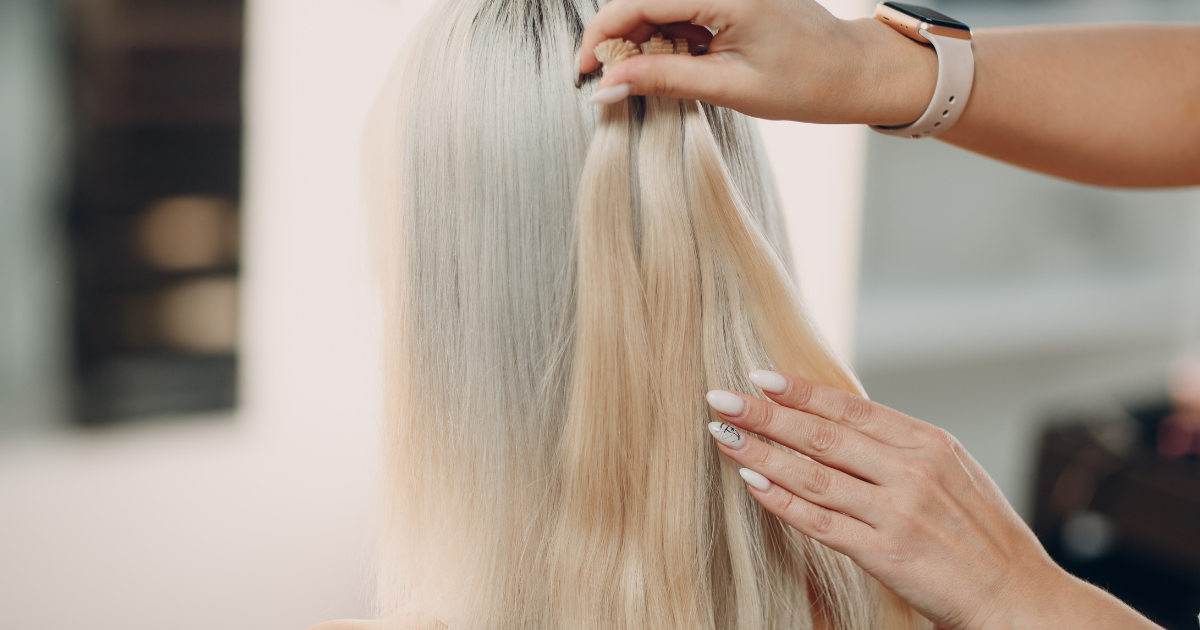
Extensions are becoming more customizable because salons can choose among different attachment methods, amounts, lengths, colors, and placement patterns. The most innovative choice is not automatically the newest method. It is the one that suits the natural hair and the intended use.
A consultation should consider:
- Whether the goal is length, overall volume, or targeted fullness
- The natural hair’s density and condition
- How often the client swims, exercises, or heat-styles
- The visibility of attachment points in preferred hairstyles
- Installation, maintenance, removal, and replacement costs
- The required washing, detangling, and sleeping routine
Comfort should never be ignored. The AAD warns that extensions installed too tightly can contribute to breakage and traction alopecia. Persistent pain or headaches are reasons to speak up immediately.
Home Care Is Part of the Feedback Loop
A personalized service is only half finished when the client leaves the chair. The next stage is learning how the hair behaves at home.
Notice how long the style takes to recreate, when the scalp begins to feel oily, which areas tangle, and how the color changes between visits. Share that feedback next time. The stylist can then adjust the cut, formula, product amount, or styling method.
Use tools with a purpose
Smart styling does not require using every tool you own. The AAD’s damage-reduction guidance recommends limiting excessive heat, allowing hair to partially air-dry, and using flat irons on dry hair at a low or medium setting.
A practical routine might include:
- One cleanser suited to the scalp and styling habits
- A conditioner appropriate for the lengths and ends
- A detangling or leave-in product when needed
- Heat protection when hot tools are used
- One finishing product with a clearly defined purpose
Adding products should solve identifiable problems, not simply make the routine longer.
Personalization Still Needs Professional Boundaries
Stylists can assess visible condition, explain cosmetic services, and recommend gentler styling practices. They should not diagnose unexplained shedding, scalp disease, infections, or other medical conditions.
Sudden hair loss, bald patches, sores, persistent pain, or significant irritation should be discussed with an appropriate healthcare professional. A personalized beauty plan works best when cosmetic and medical concerns are kept within their proper areas.
Professional standards also matter. The Maryland Board of Cosmetologists licenses qualified individuals, issues salon permits, establishes health and safety standards, and investigates complaints involving licensed practice.
A Personalized Service Example in Towson
Tranquille Hair and Body offers a virtual consultation intended to help the team learn what new clients want before services begin. Its Towson menu includes cuts and styling, balayage, highlights, creative color, perms, smoothing and bond-focused treatments, silk presses, extensions, bridal beauty, and massage.
The salon lists beaded-row, micro-bead, tape-in, and halo extension options. Extension services require a consultation so a stylist can recommend a customized approach and provide an estimate. This is a useful example of matching the method to the person instead of presenting one installation system as the universal answer.
Anyone considering these or similar services should confirm current availability, suitability, pricing, maintenance, and aftercare directly with the salon.
Bring Better Questions to Your Next Consultation
- What parts of my goal are realistic in one visit?
- How does my current hair condition affect the plan?
- What will the result look like without professional styling?
- How will the cut, color, or treatment change as it grows out?
- Which maintenance services are likely to be needed?
- What are the simplest steps for recreating the finish at home?
- Which signs would mean I should contact the salon before my next visit?
The Best Innovation Feels Personal
Great beauty innovation is not about making hair care more complicated. It is about using better information to make more appropriate choices.
When consultation, technique, safety, maintenance, and honest feedback work together, the result feels less like a temporary trend and more like a design made for real life.