Why the Smartest Hair Innovation Starts With Personalization
A Hair salon can use new techniques, products, and digital tools, but the most meaningful innovation is still a result designed around the individual.
Hair trends move quickly. One month brings ultra-glossy brunettes, the next introduces airy layers, dimensional blonding, or a renewed interest in smooth, polished finishes. These ideas can be fun, but copying a trending image without considering the person wearing it often leads to disappointment.
Modern salon innovation is becoming more personal. Stylists are combining technical education with detailed consultations, hair-history records, thoughtful product selection, and realistic maintenance plans. The goal is not simply to create an impressive reveal. It is to create hair that continues to work after the client returns home.
Personalization Begins Before the First Cut or Color
A consultation is where inspiration becomes a workable plan. Reference photos are useful, but they do not reveal the model’s natural texture, previous color, styling routine, or the lighting and editing used to produce the image.
A stylist needs to translate the visual idea into practical questions:
- Which element of the photo does the client like most?
- What chemical services have previously been applied?
- How does the hair behave when air-dried?
- How much time does the client spend styling each morning?
- How frequently can the client maintain the result?
- Is the priority brightness, length, softness, volume, or easy upkeep?
The answers can completely change the service plan. Someone who loves the dimension in a blonde photograph may not actually want the frequent maintenance associated with a dramatic transformation. A softer placement or a shade closer to the natural base could deliver the desired feeling with a more comfortable schedule.
Hair Is a Material With a History
Hair may look like a blank canvas, but every strand carries evidence of previous coloring, lightening, heat styling, environmental exposure, and everyday handling. Different sections can also have different histories. New growth may be untreated while the ends have experienced years of chemical and mechanical stress.
A scientific review of hair cosmetics and hair-fiber structure explains how cosmetic procedures affect the cuticle, cortex, strength, appearance, and manageability of hair. This is why an experienced stylist evaluates more than the current color.
Before recommending a major change, the stylist may consider:
- Porosity and elasticity
- Density and strand diameter
- Natural curl or wave pattern
- Evidence of breakage or excessive dryness
- Permanent color, lightener, relaxer, or smoothing history
- The condition of the mid-lengths and ends
A strand test can provide additional information when the outcome is uncertain. It will not predict every variable, but it can show how a small section responds before the entire head is processed.
Color Innovation Is More Than Choosing a Shade
Modern color work involves placement, contrast, tone, starting level, and maintenance. Two clients can request “warm brunette” or “dimensional blonde” and need completely different formulas and techniques.
The smartest color plan considers how the result will change over time. Where will new growth become visible? How will the tone fade? Can the client maintain it with glosses or partial services, or will it require frequent full-color visits?
The American Academy of Dermatology offers guidance for reducing dryness and brittleness associated with coloring and perming. Its recommendations reinforce a practical truth: the distance between the starting color and desired result influences how demanding a transformation may be.
Questions worth asking before a color service
- Can this result be achieved comfortably in one visit?
- What compromises would help preserve the hair’s condition?
- How will the color look after several weeks?
- Which home products are genuinely necessary?
- What maintenance services will be needed?
- What signs would suggest that the plan should be adjusted?
Clear answers make color feel less mysterious. They also help clients compare the excitement of the initial result with the time, cost, and care required to maintain it.
Healthy-Looking Hair Depends on Everyday Habits
A technically beautiful service can lose its impact when the home routine works against it. Excessive heat, rough towel drying, aggressive brushing, and unsuitable product use can affect shine, manageability, and breakage.
The American Academy of Dermatology’s healthy-hair recommendations include choosing products for the hair type, concentrating shampoo on the scalp, using conditioner after washing, handling wet hair carefully, and limiting high heat.
A realistic routine does not need ten products. For many people, a simple plan is easier to follow:
- Cleanse appropriately. Base frequency on scalp oiliness, activity, texture, and product buildup.
- Condition where needed. Focus on areas that feel dry or are prone to tangling.
- Detangle gently. Work gradually instead of pulling through knots.
- Use heat intentionally. Apply appropriate protection and avoid more heat than the style requires.
- Protect the finished result. Follow recommendations for color maintenance, moisture, and scheduled trims.
Product recommendations should solve a defined problem. Clients deserve to know what each item does, how much to use, and whether it replaces or complements something they already own.
Scalp Awareness Belongs in the Conversation
Great hair starts at the scalp, but salon professionals and medical professionals have different roles. A stylist can notice visible flaking, irritation, unusual shedding, or tenderness and ask useful questions. Persistent, painful, or unexplained symptoms may need evaluation by a dermatologist rather than a cosmetic workaround.
This distinction protects the client. It is reasonable to discuss cleansing habits, styling tension, or product buildup, but a salon should not disguise diagnosis or treatment claims as beauty advice.
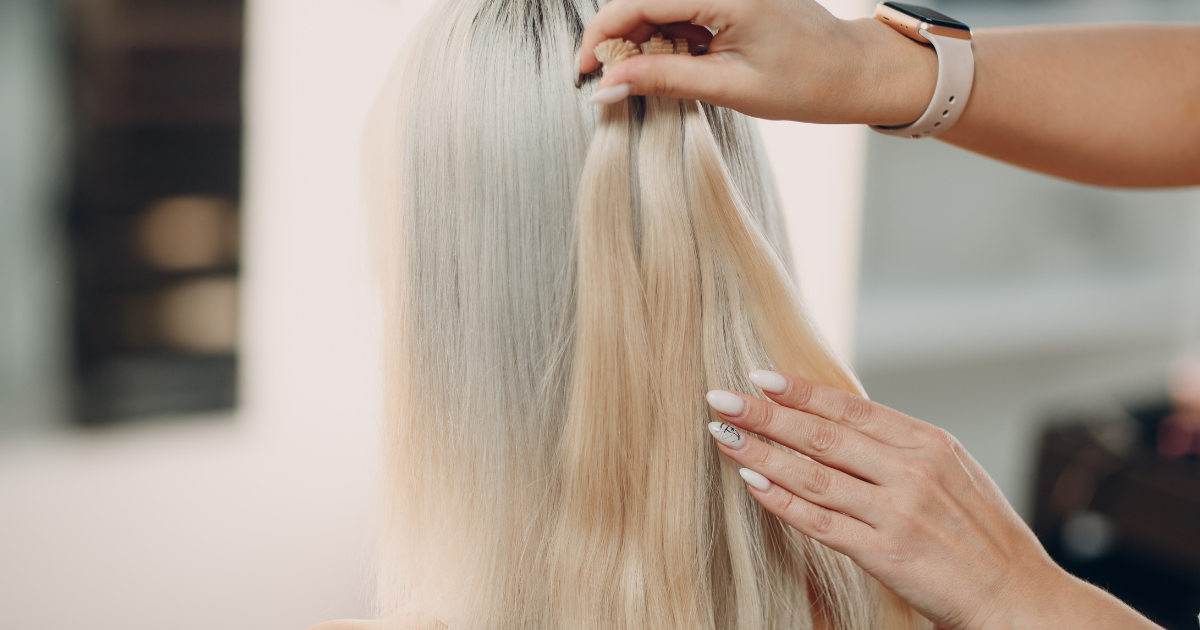
Hairstyle choice matters too. The AAD warns that repeated tension from tightly pulled hairstyles can contribute to hair loss. A modern approach to braids, ponytails, extensions, or other tension-based styles should account for comfort, attachment method, weight, and maintenance.
Product Safety Is Part of Beauty Innovation
Innovation should never mean chasing novelty without understanding the product. Professional color and smoothing services involve instructions, processing limits, ventilation considerations, and possible sensitivities.
The U.S. Food and Drug Administration’s hair-dye safety guidance recommends following warnings, performing the instructed skin test, wearing gloves, observing processing times, and avoiding the mixing of different dye products.
Smoothing products deserve particular attention because formulations and labels can be confusing. The Occupational Safety and Health Administration provides information about formaldehyde exposure from certain hair-smoothing products, including ventilation, labeling, safety data, training, and protective measures.
In Georgia, salons must also follow state sanitation requirements. The Georgia rules for cosmetology sanitation and health address areas such as shampoo equipment, tools, linens, facilities, and disinfecting practices. Cleanliness is not a decorative feature. It is part of competent service.
Lower-Waste Beauty Can Be Practical
Sustainability becomes useful when it moves beyond vague claims. Accurate product measuring can reduce unnecessary color waste. Better inventory tracking can prevent unopened products from expiring. Concentrated refills and thoughtful purchasing may reduce packaging when they are compatible with sanitation and performance needs.
Cleaning products are another area worth examining. The EPA Safer Choice program helps consumers and businesses identify qualifying products formulated with ingredients evaluated against health and environmental criteria.
Clients can support lower-waste routines by buying products they will actually use, finishing suitable products before replacing them, and asking whether packaging can be locally recycled. A smaller, well-chosen routine is often more practical than a shelf filled with short-lived experiments.
Education Keeps Innovation Useful
A technique does not become valuable simply because it is new. Stylists need opportunities to study it, practice it, understand its limitations, and decide which clients are appropriate candidates.
The U.S. Bureau of Labor Statistics notes that hairstylists and cosmetologists commonly pursue ongoing education to remain current with techniques and trends. That learning can include cutting, color formulation, textured hair, extensions, smoothing, consultation, sanitation, and client communication.
Salon 124 reflects this education-centered approach in greater Atlanta. Established in 1991, the organization publishes that its stylists receive continuing training in cutting, hair color, and keratin and smoothing treatments. It currently lists locations in Grayson, Sugarloaf in Duluth, Hamilton Mill in Dacula, Suwanee, and downtown Monroe.
Its wider organization also includes a training path for newer professionals. That matters because beauty innovation becomes more reliable when knowledge is taught, practiced, and refined rather than treated as a passing social-media trick.
How to Recognize Meaningful Salon Innovation
Before trying a major change, look beyond trend names and product buzzwords. A thoughtful salon experience should make the plan easier to understand.
- The stylist asks about history, routine, and priorities.
- Options and limitations are explained honestly.
- The condition of the hair influences the recommendation.
- Safety instructions and processing standards are followed.
- The maintenance plan is discussed before the service begins.
- Home-care advice is specific and manageable.
- New techniques are supported by training and sound judgment.
The beauty industry will keep producing new tools, formulas, and techniques. The best innovations will not make professional judgment less important. They will help skilled stylists understand the hair more clearly, communicate choices more honestly, and create results that suit real life. That is what turns a trend into a genuinely personal service.